
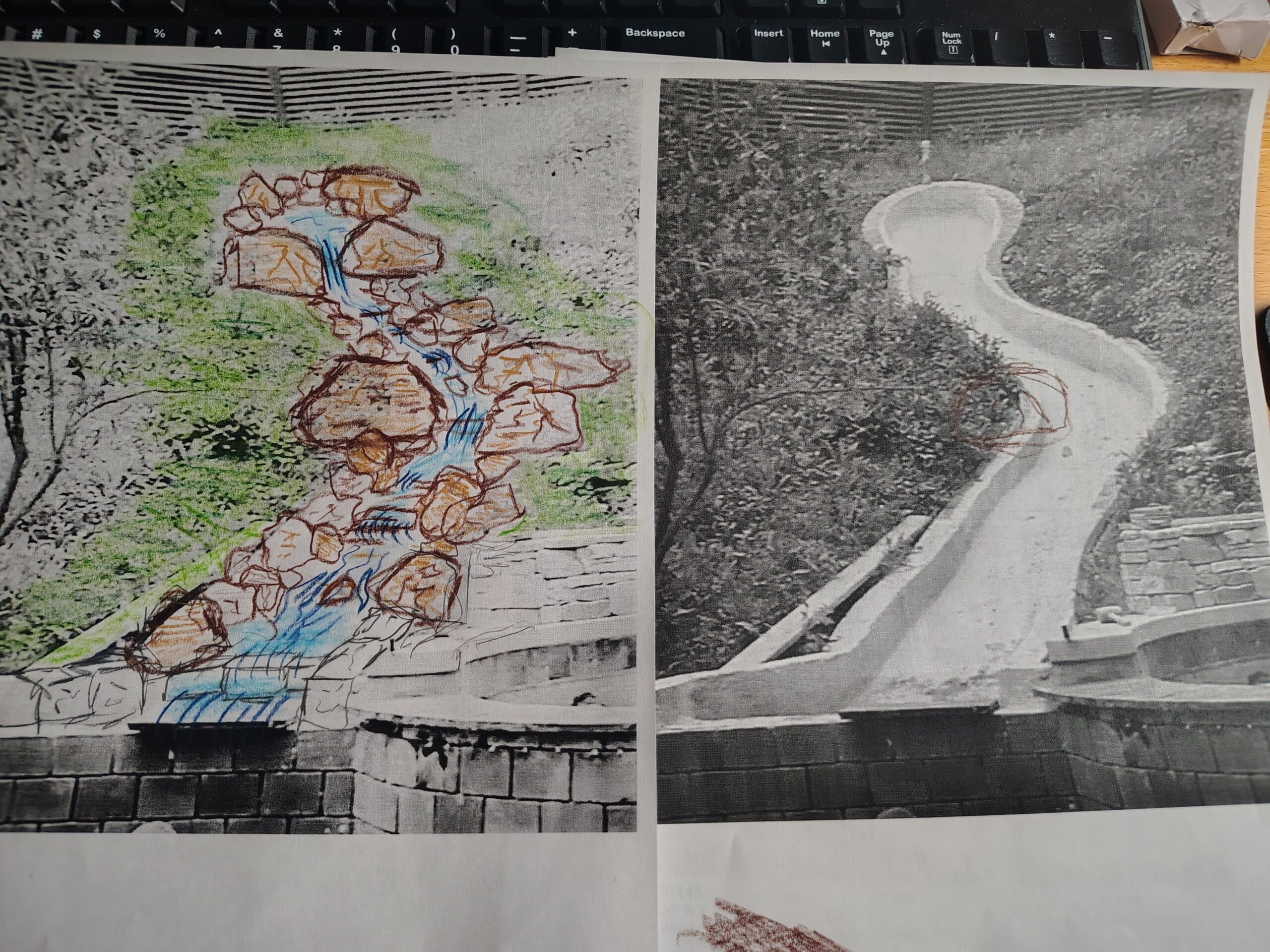
Every build like this starts with a sketch on paper. We mapped out the elevation changes, the flow path, and how the water would move from the top of the hill all the way down to the pool below. That design phase isn't just about looks - it determines how the whole system performs. Get it wrong on paper and you're fixing problems in concrete later.
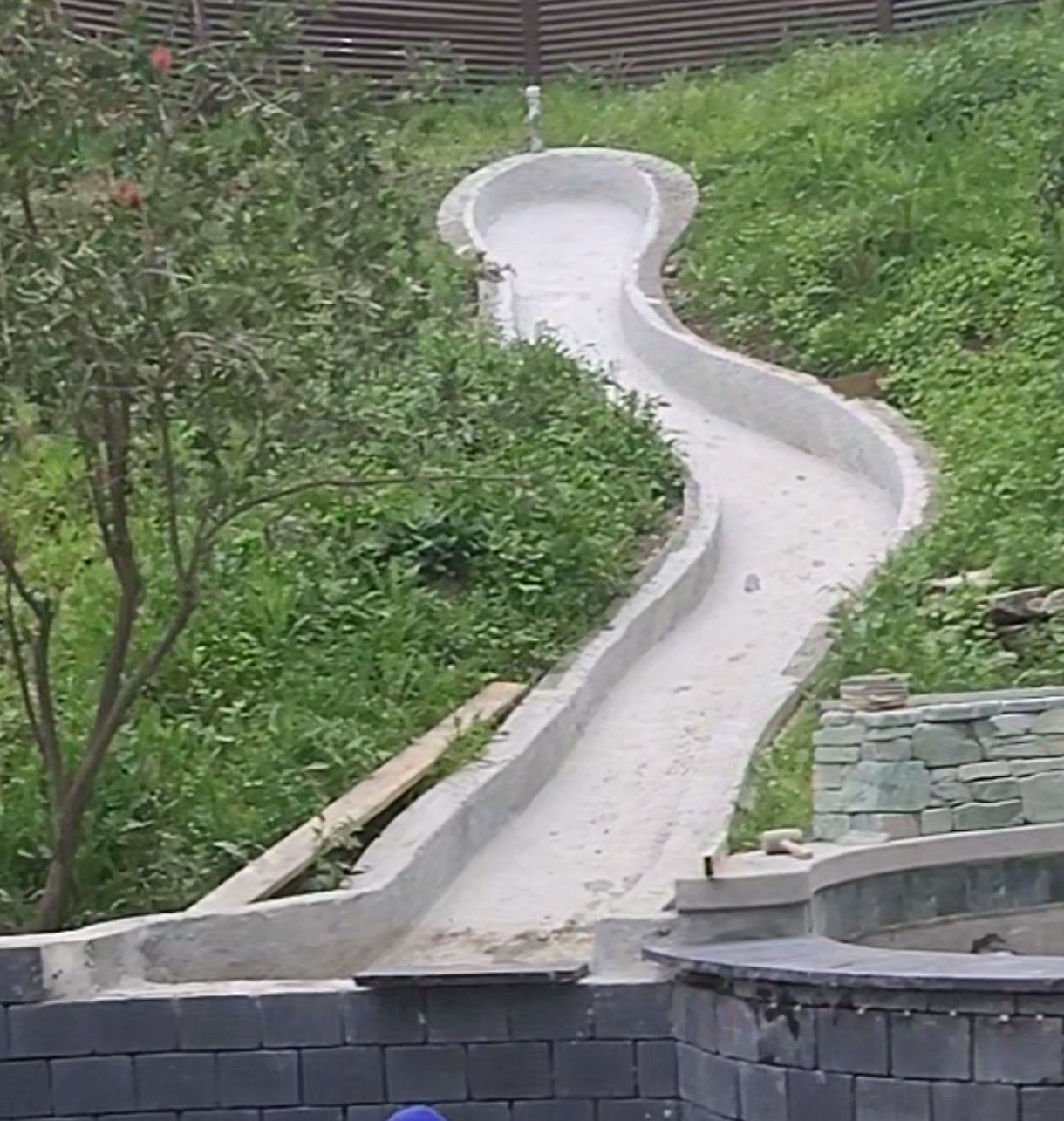
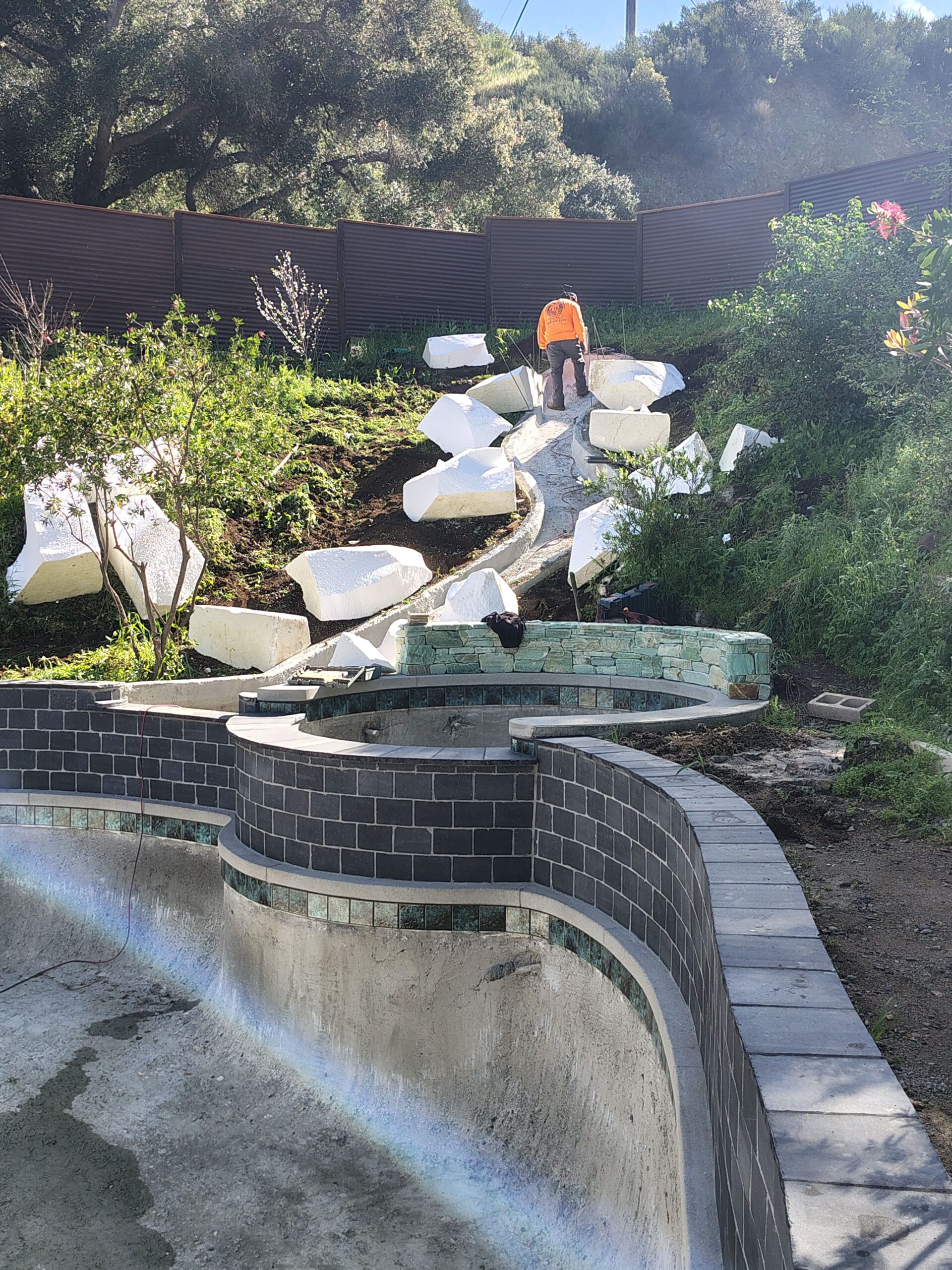
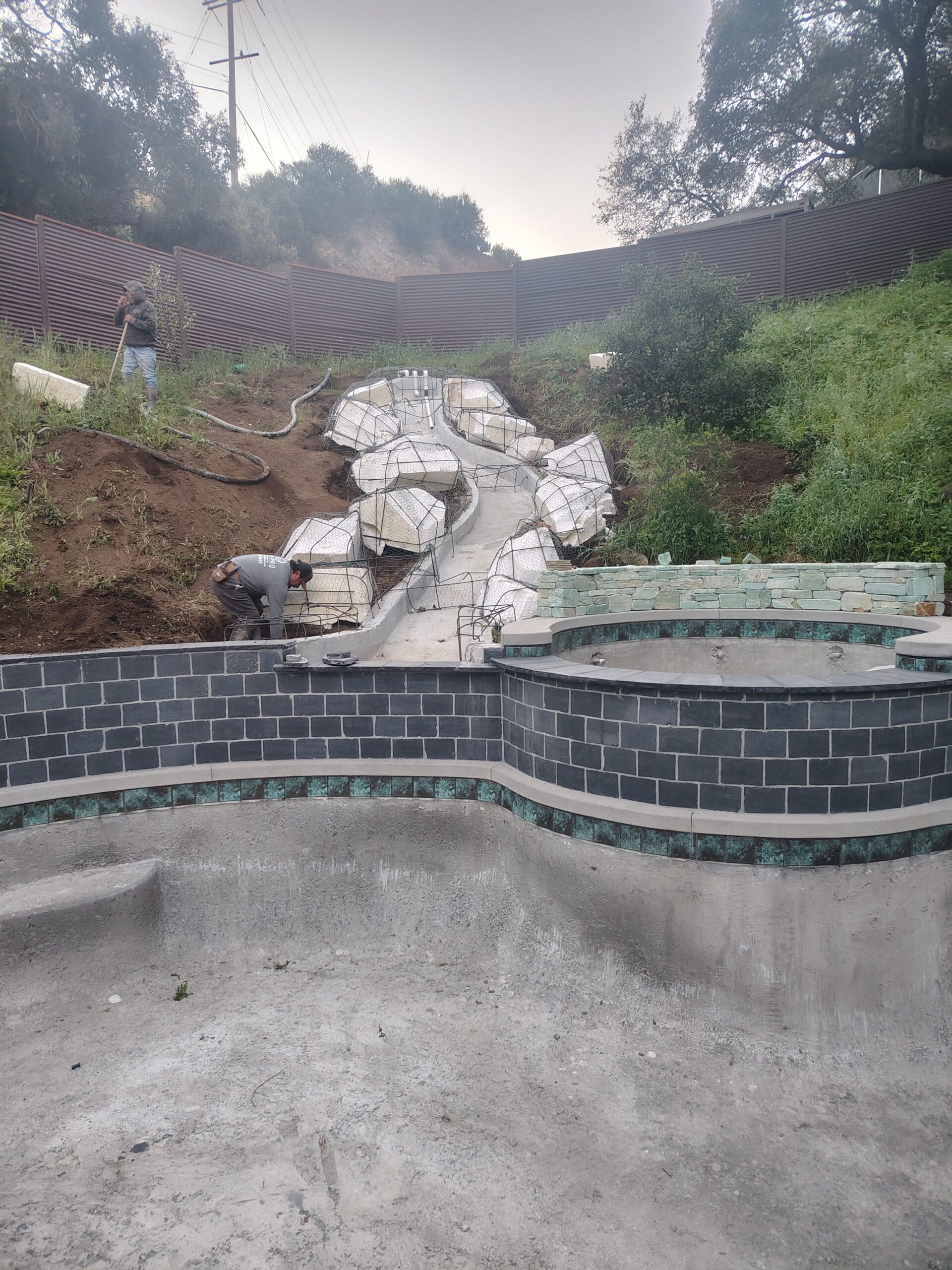
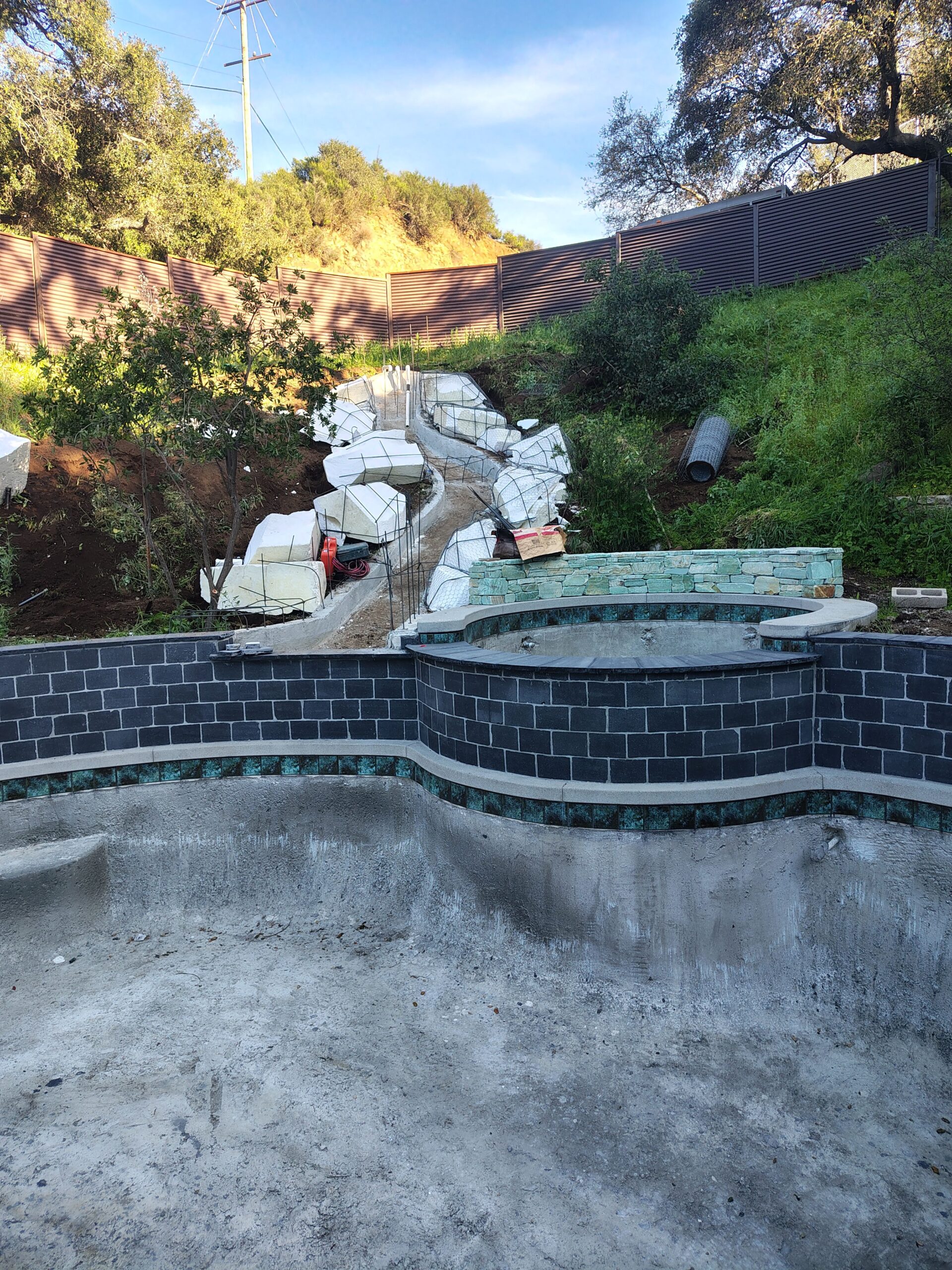
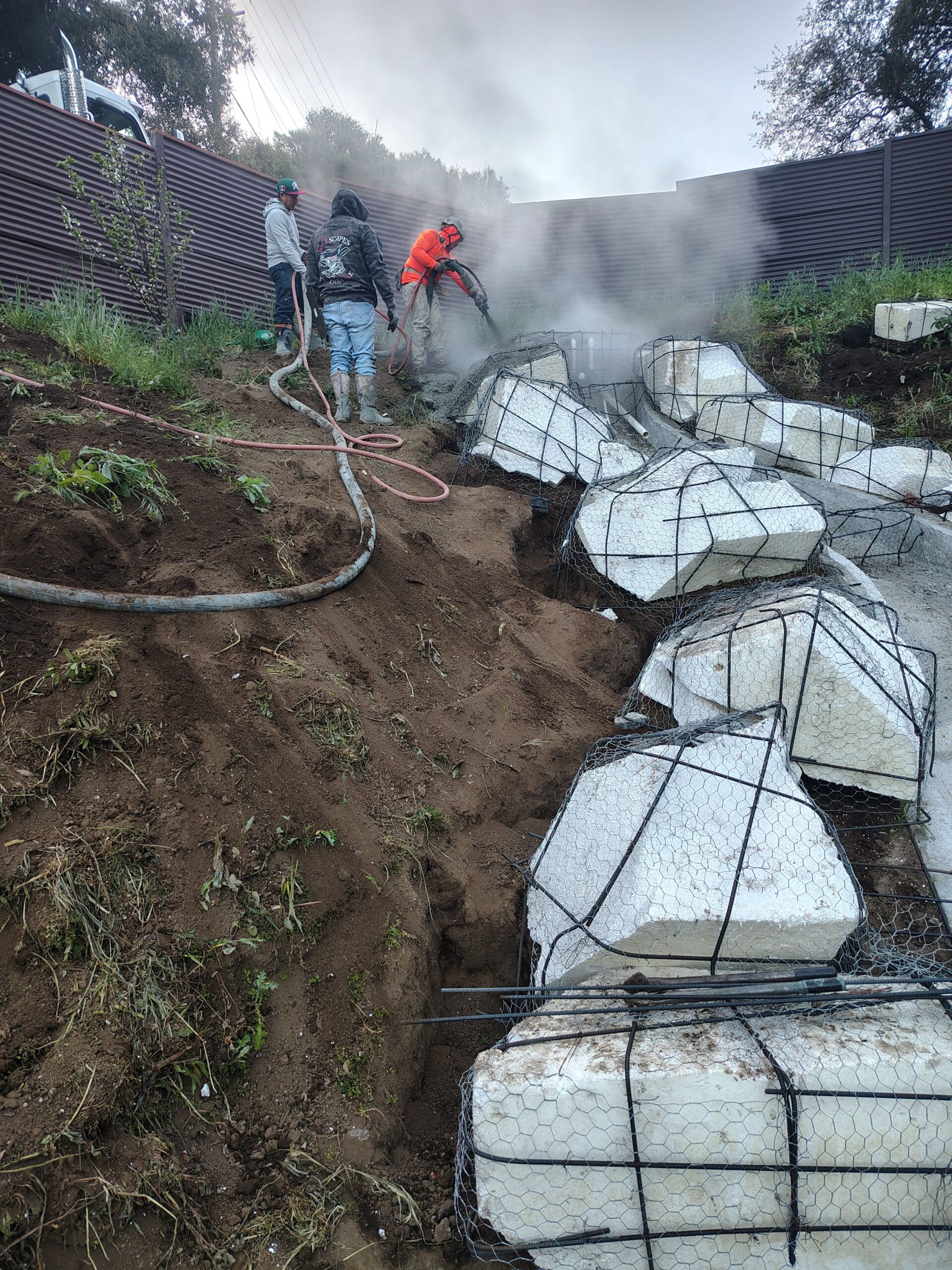
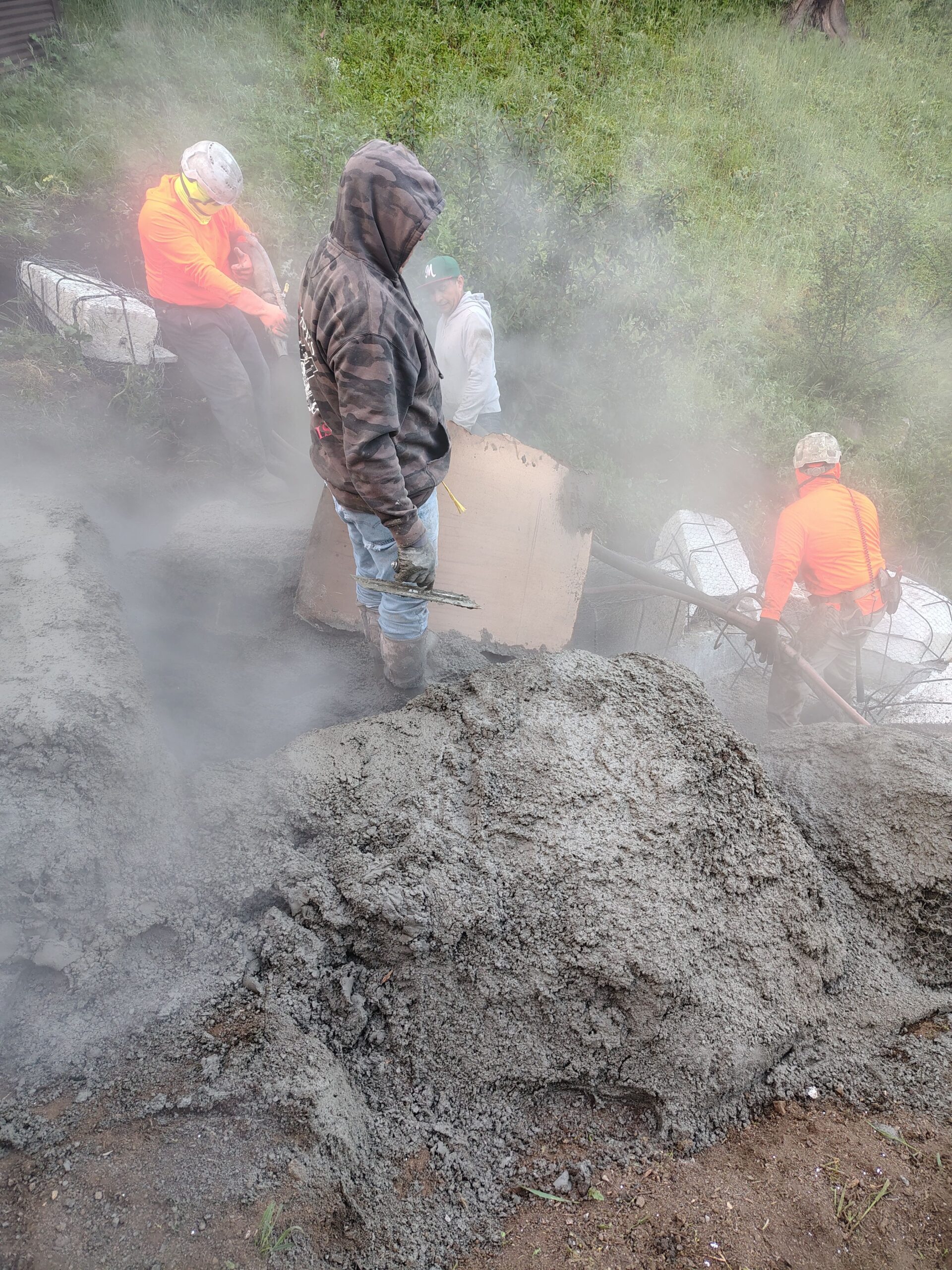
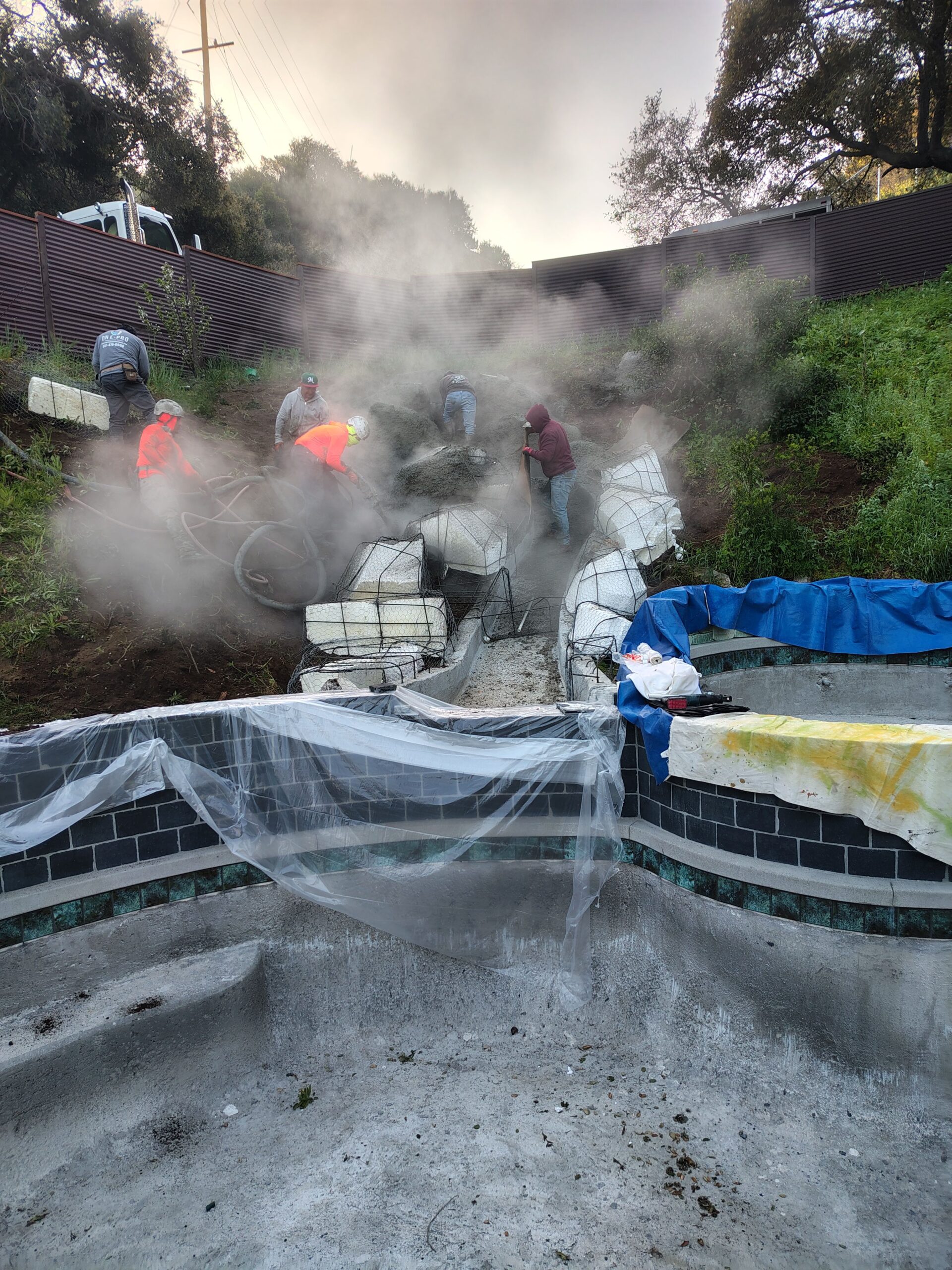
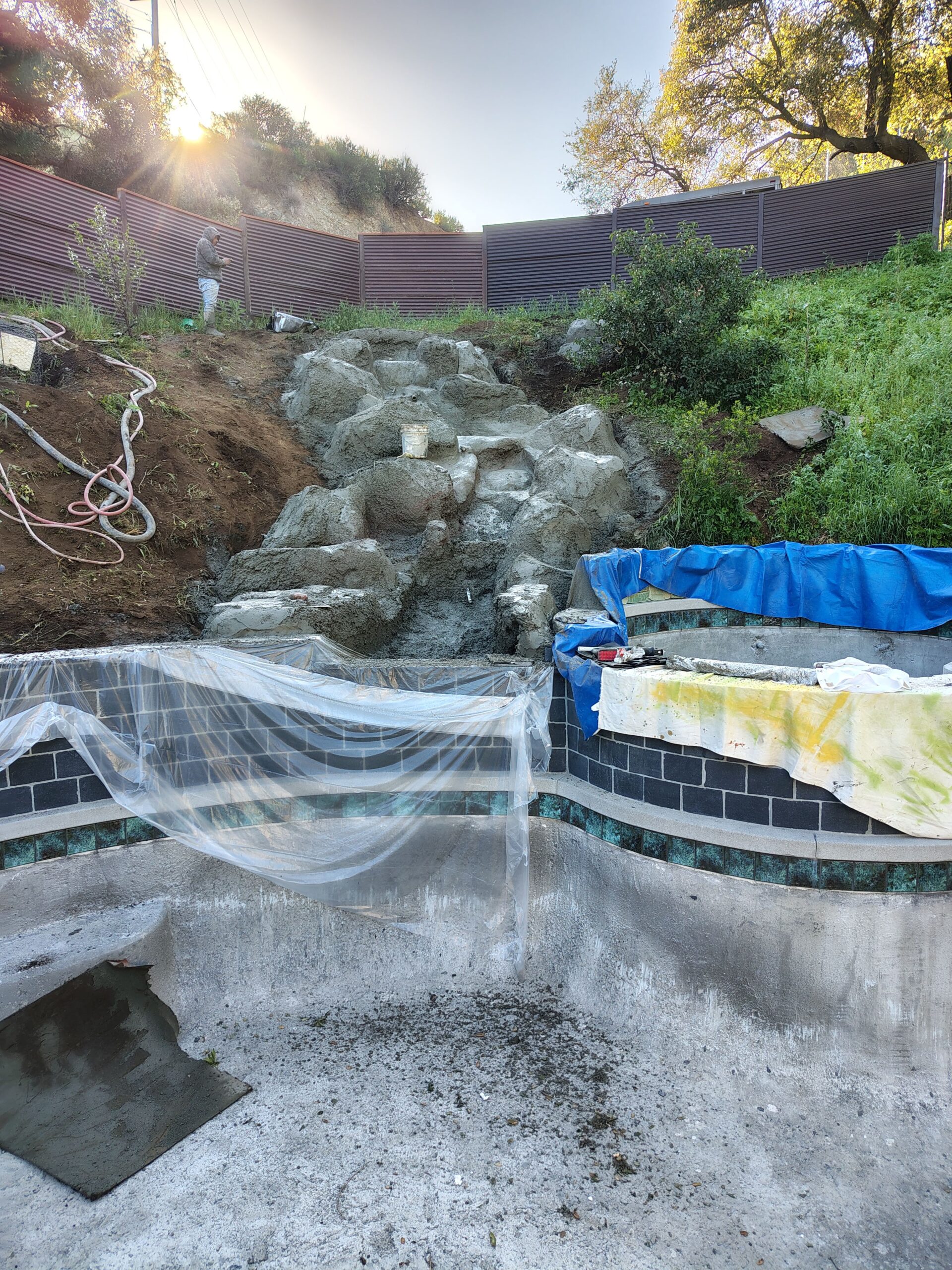
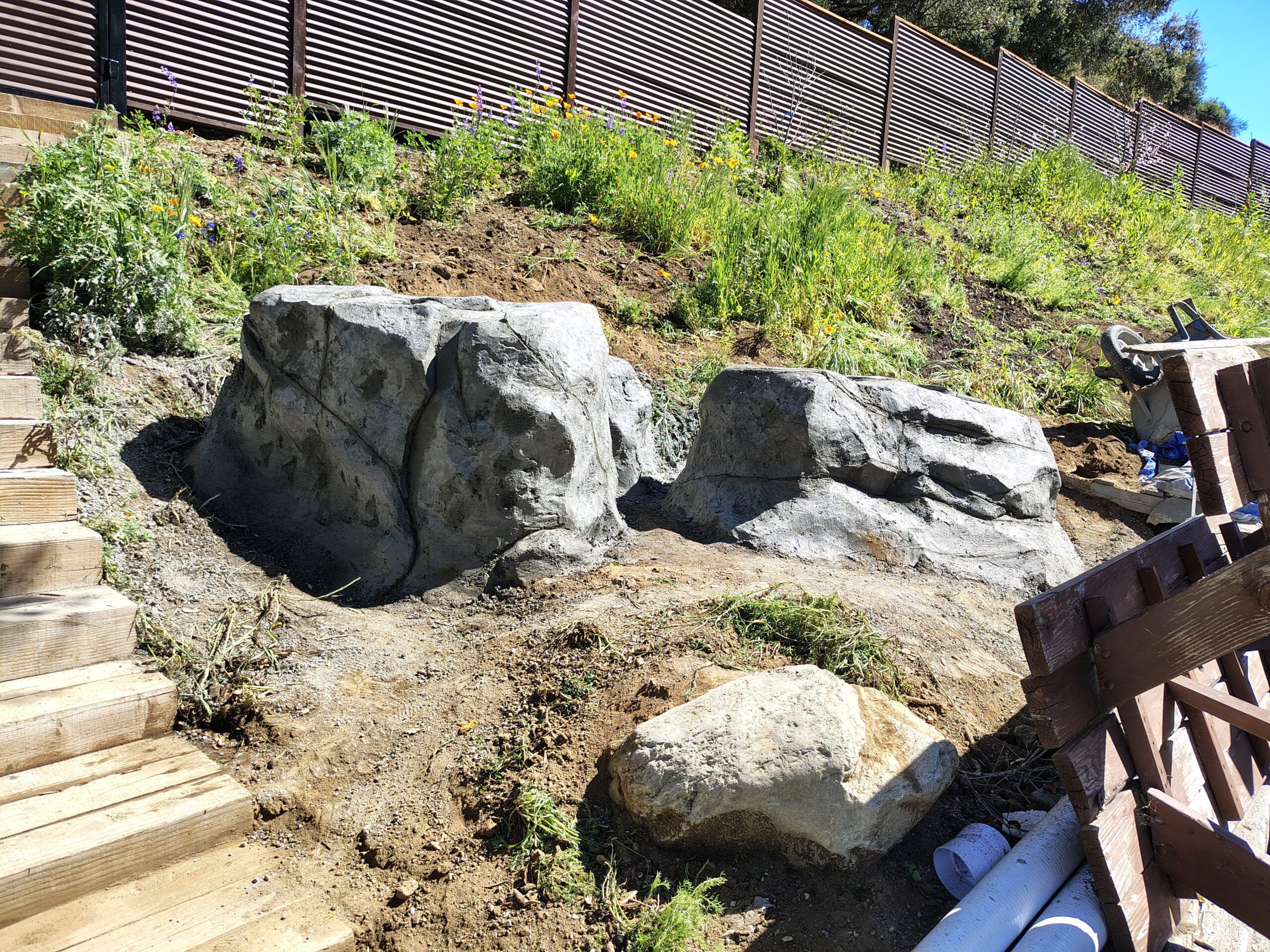
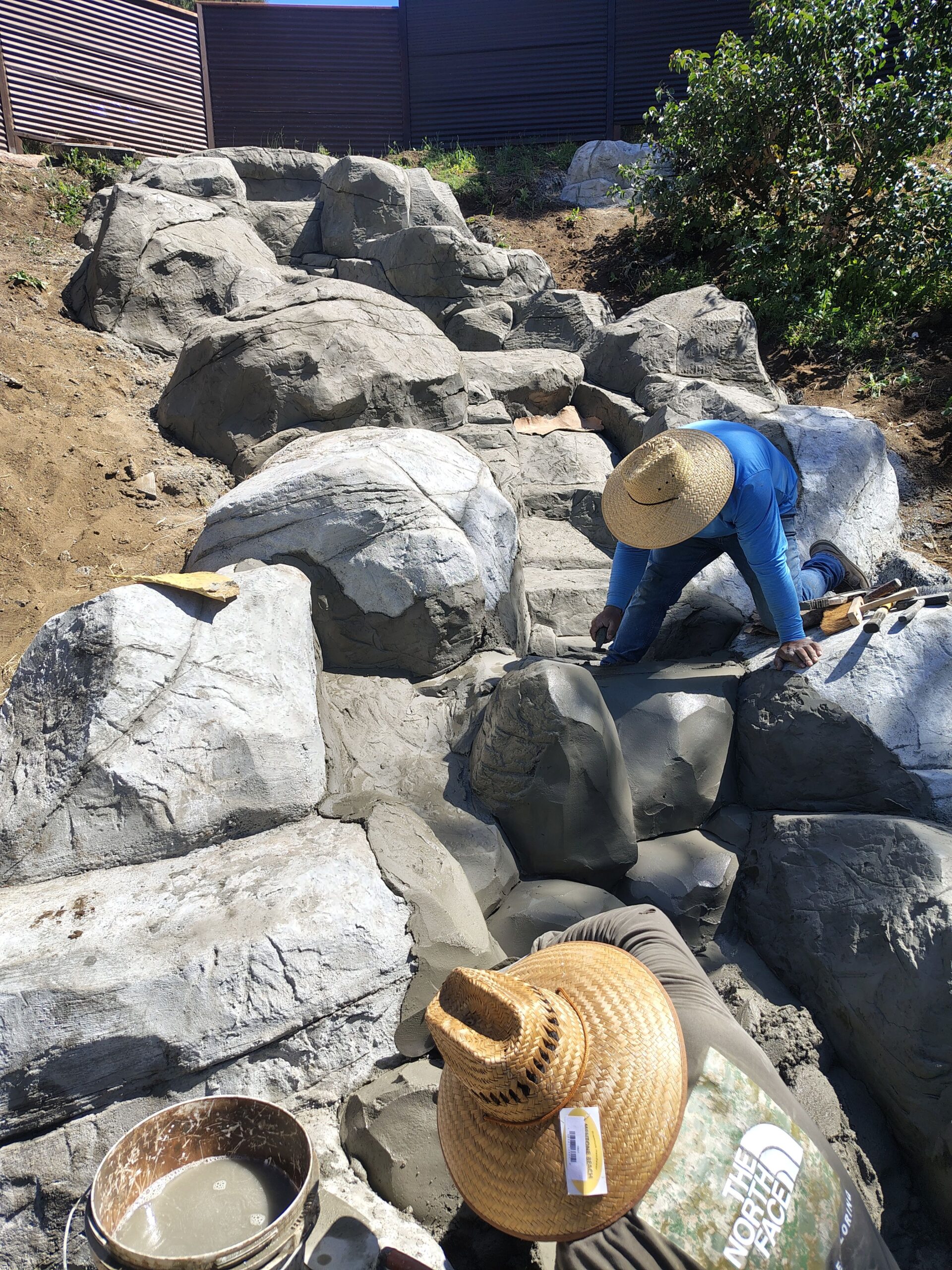
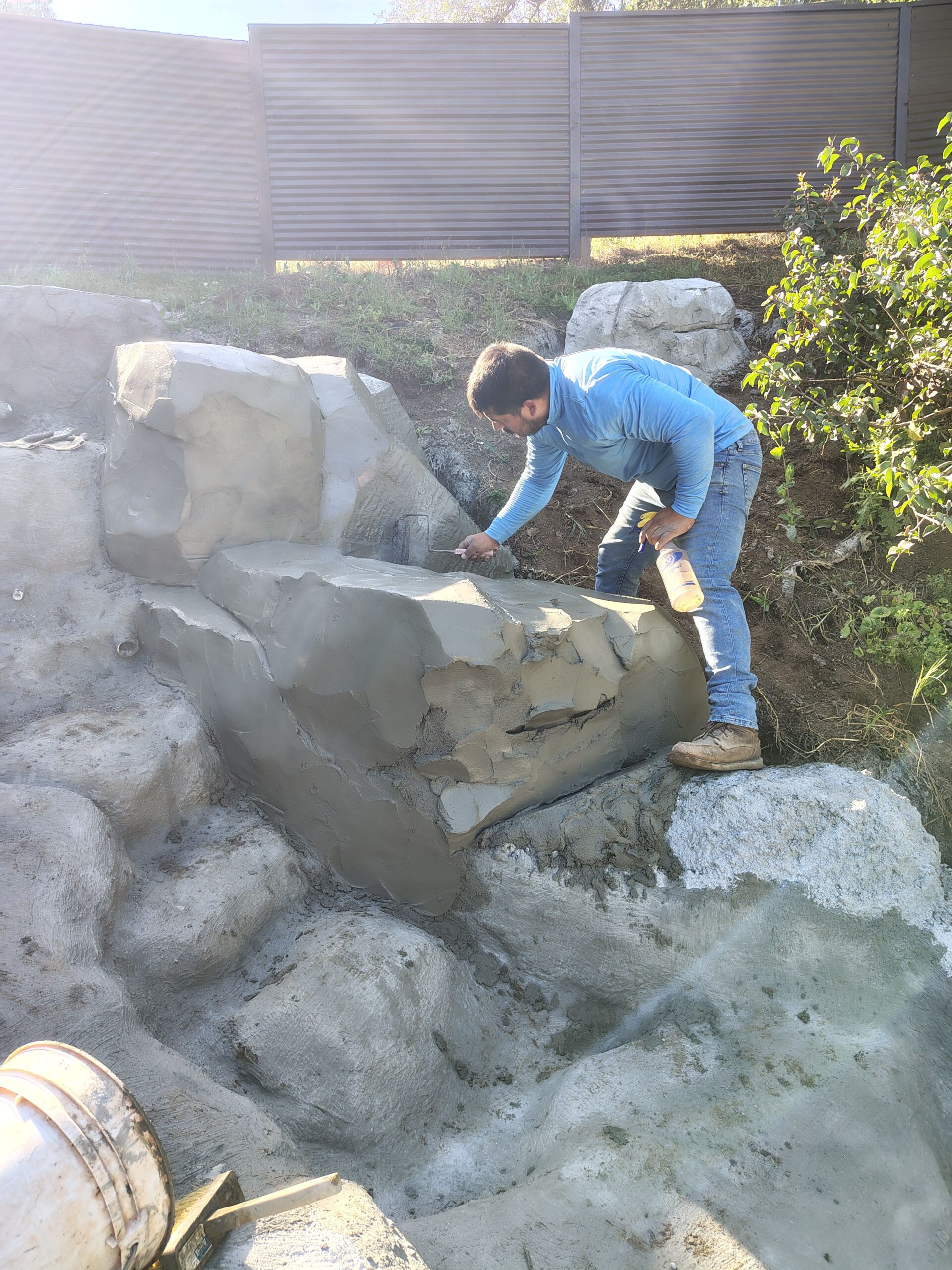
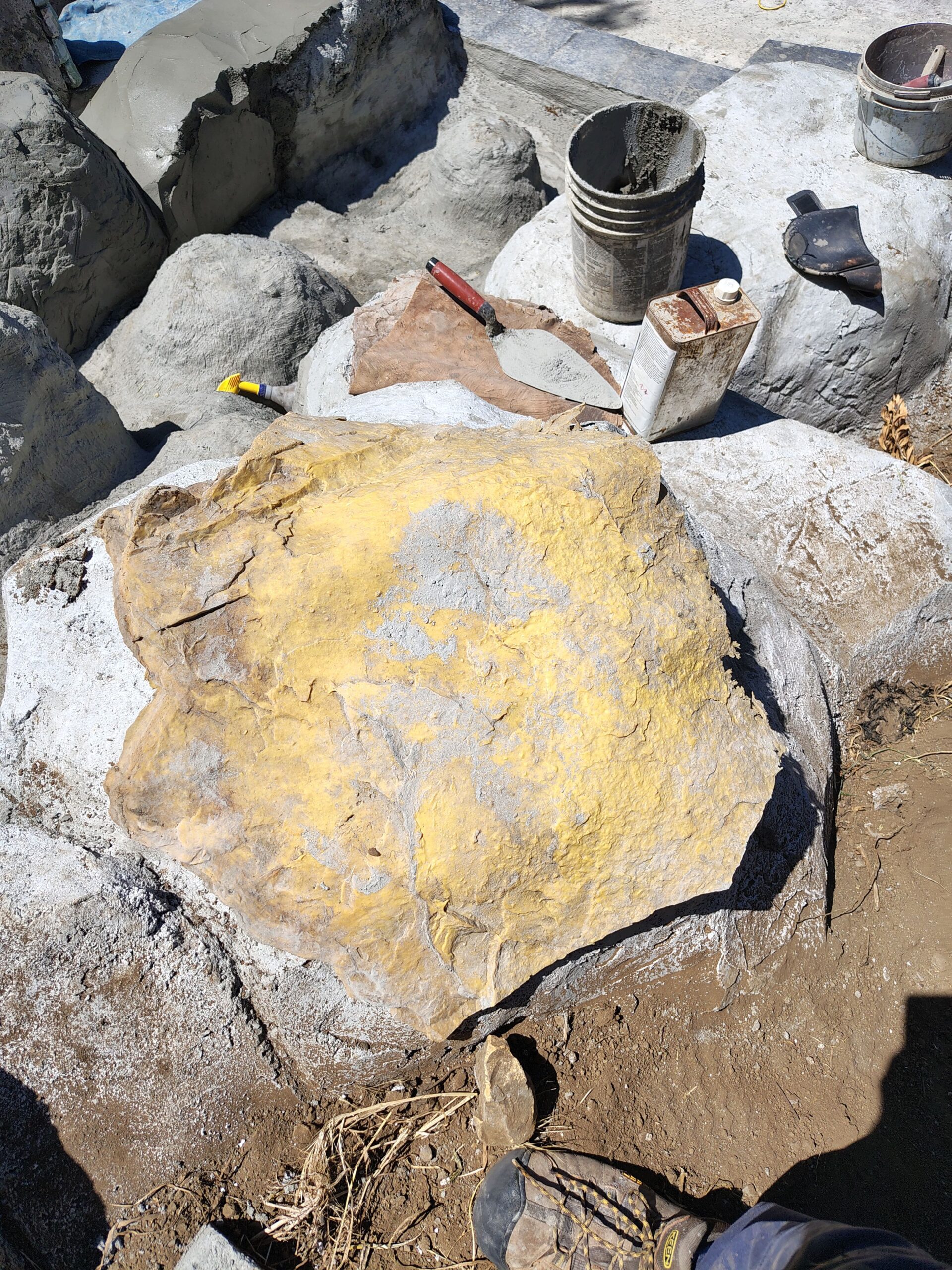
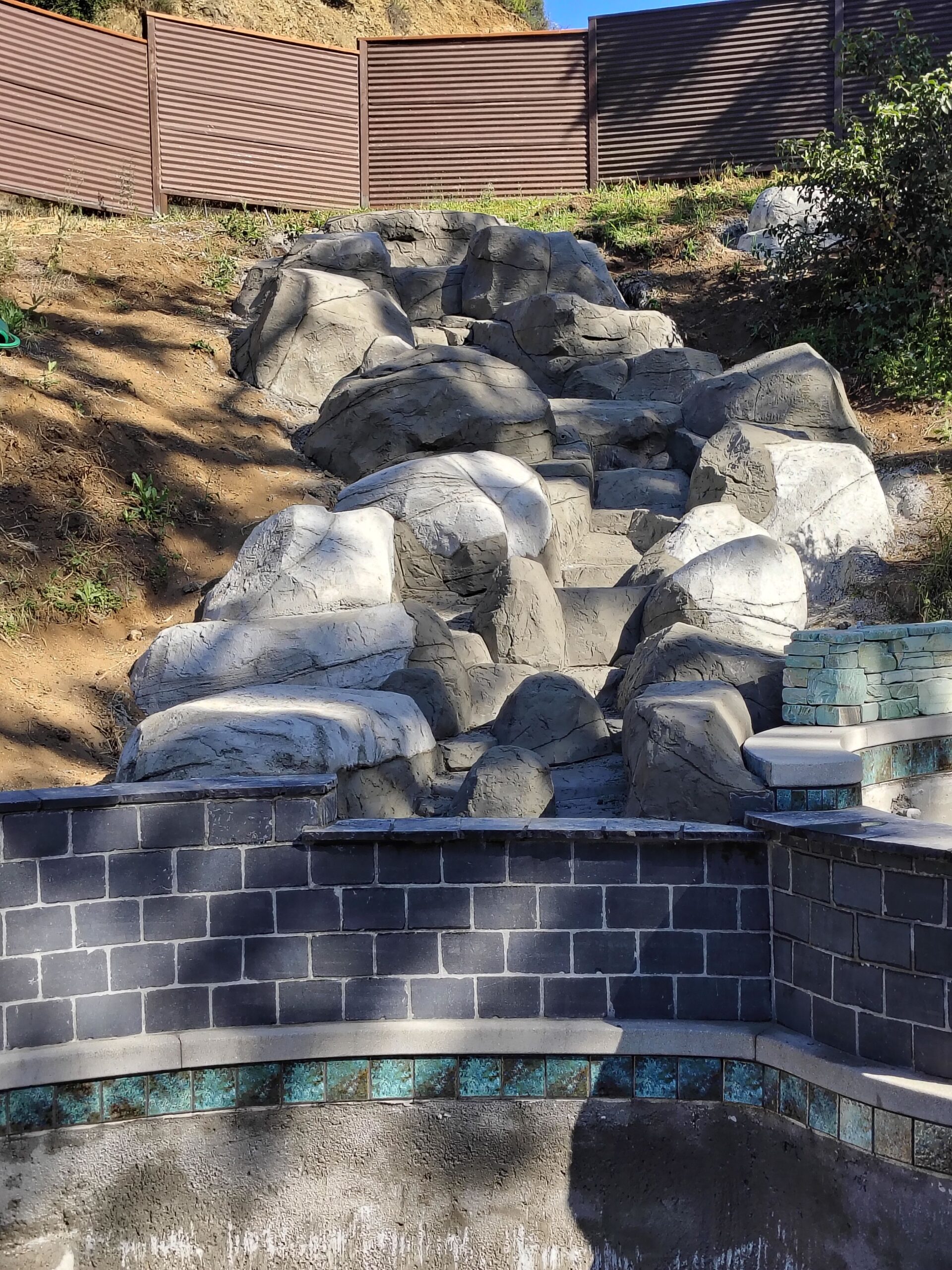
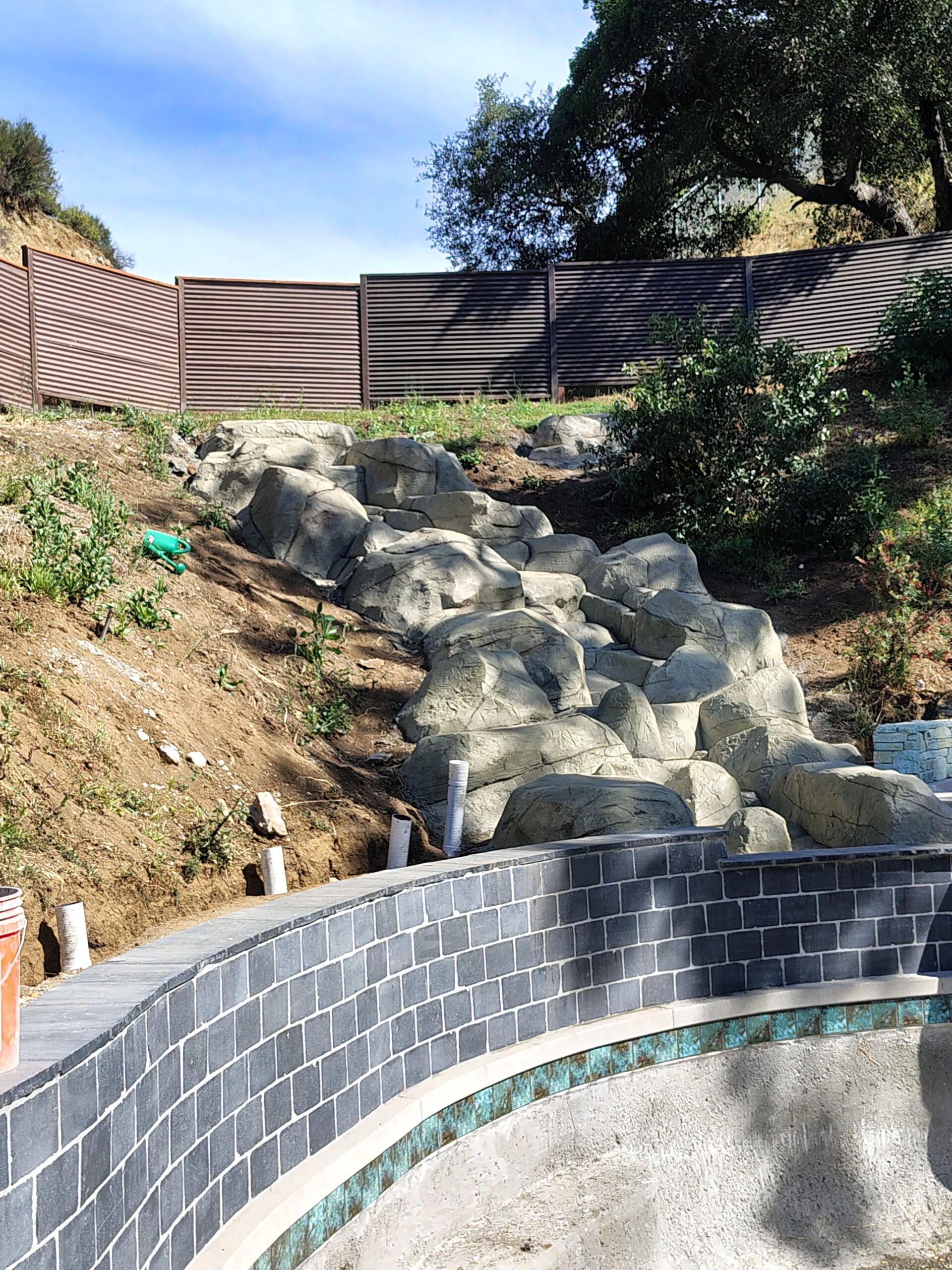
Here's what we were working with: a sloped hillside that needed a fully engineered water channel and a large-scale rock formation built completely from scratch. We started by forming the waterway with reinforced shotcrete to establish the flow path, then positioned and shaped foam forms that would become the rock bodies. Each form got wrapped in wire mesh and rebar before the shotcrete crew moved in. Watching the crew spray and shape that material while steam is rising off the hillside - that's a skilled trade in action.
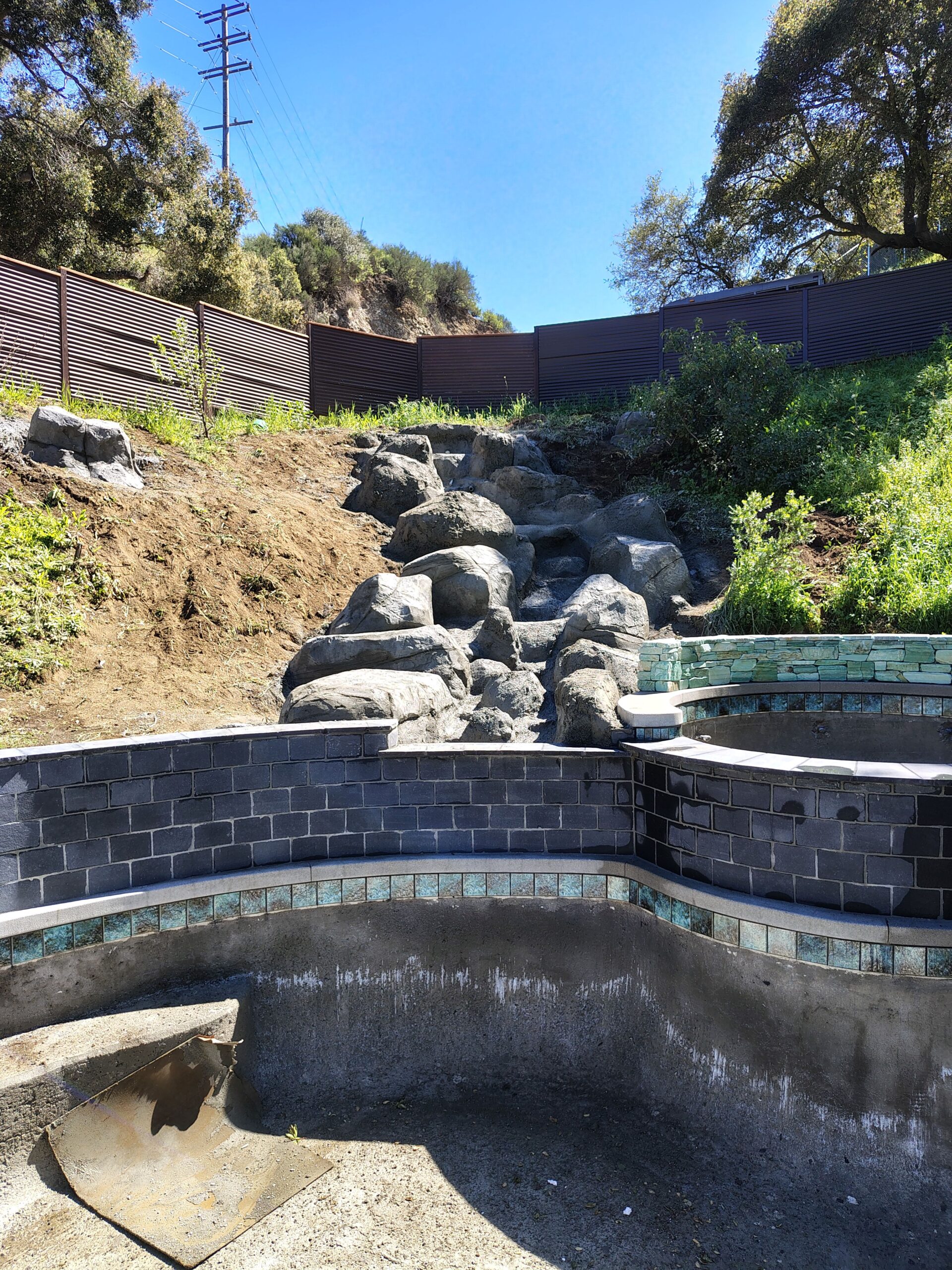
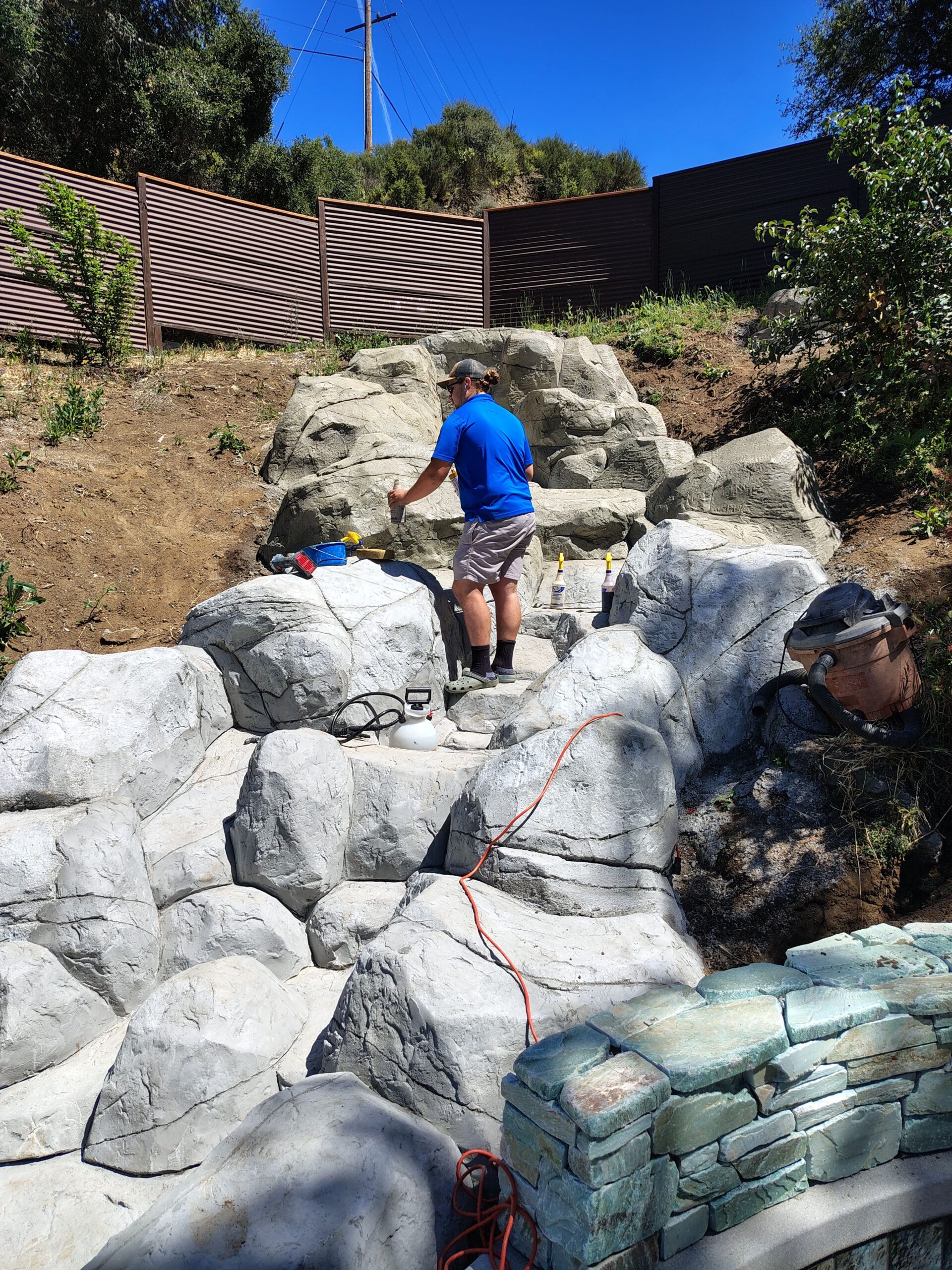
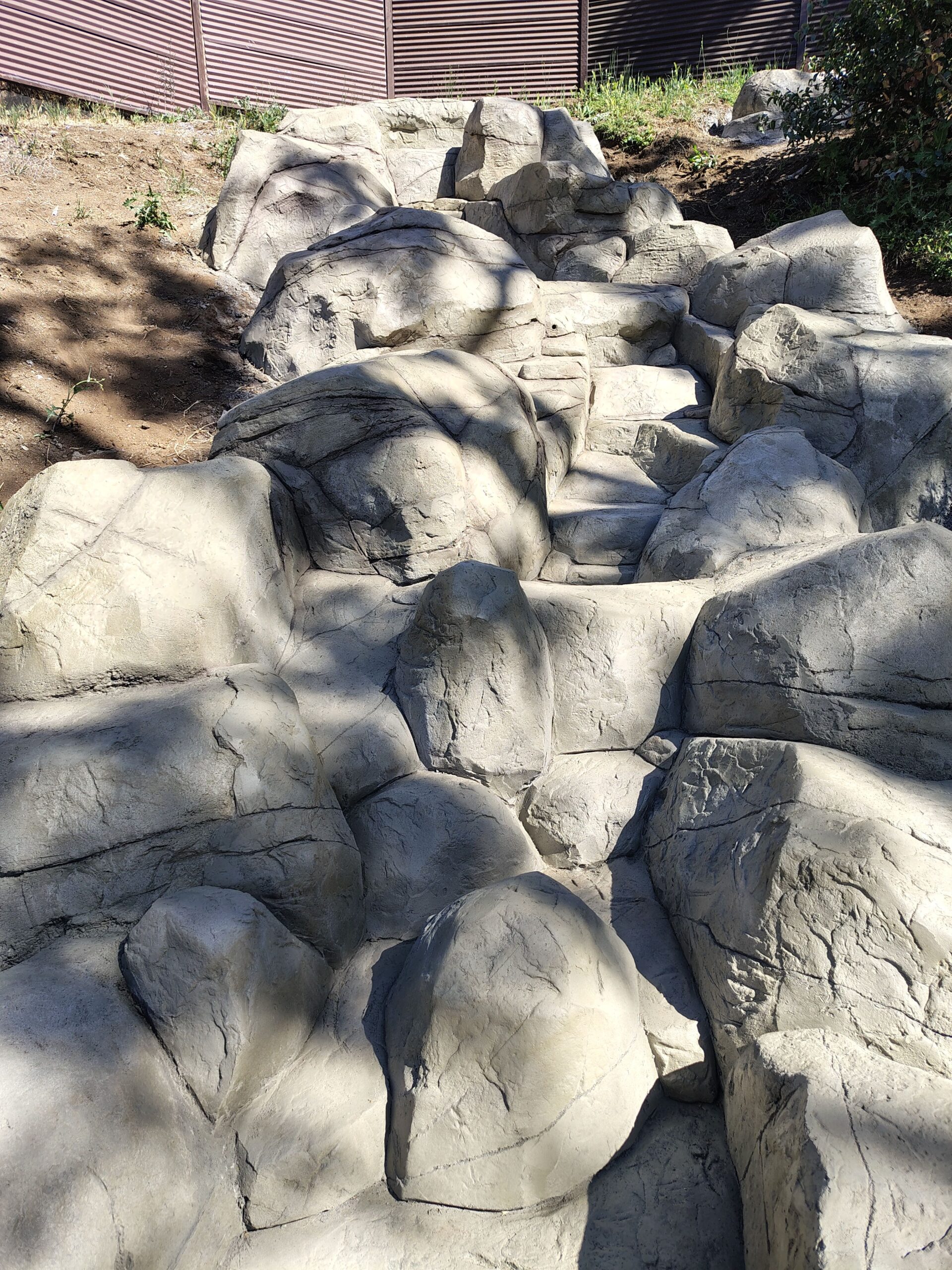
Once the shotcrete cured, the sculpting work began. Every surface got hand-textured to replicate the look of natural stone - sharp edges, rounded faces, cracks, and ledges. Nothing about this is stamped or poured from a mold. It's carved and worked by hand, rock by rock. After texturing, the coloring process started with base coats and hand-applied highlights to pull out depth and mimic how light hits real stone. That layer of scenic painting is what separates a fake-looking concrete pile from something that actually reads as natural.
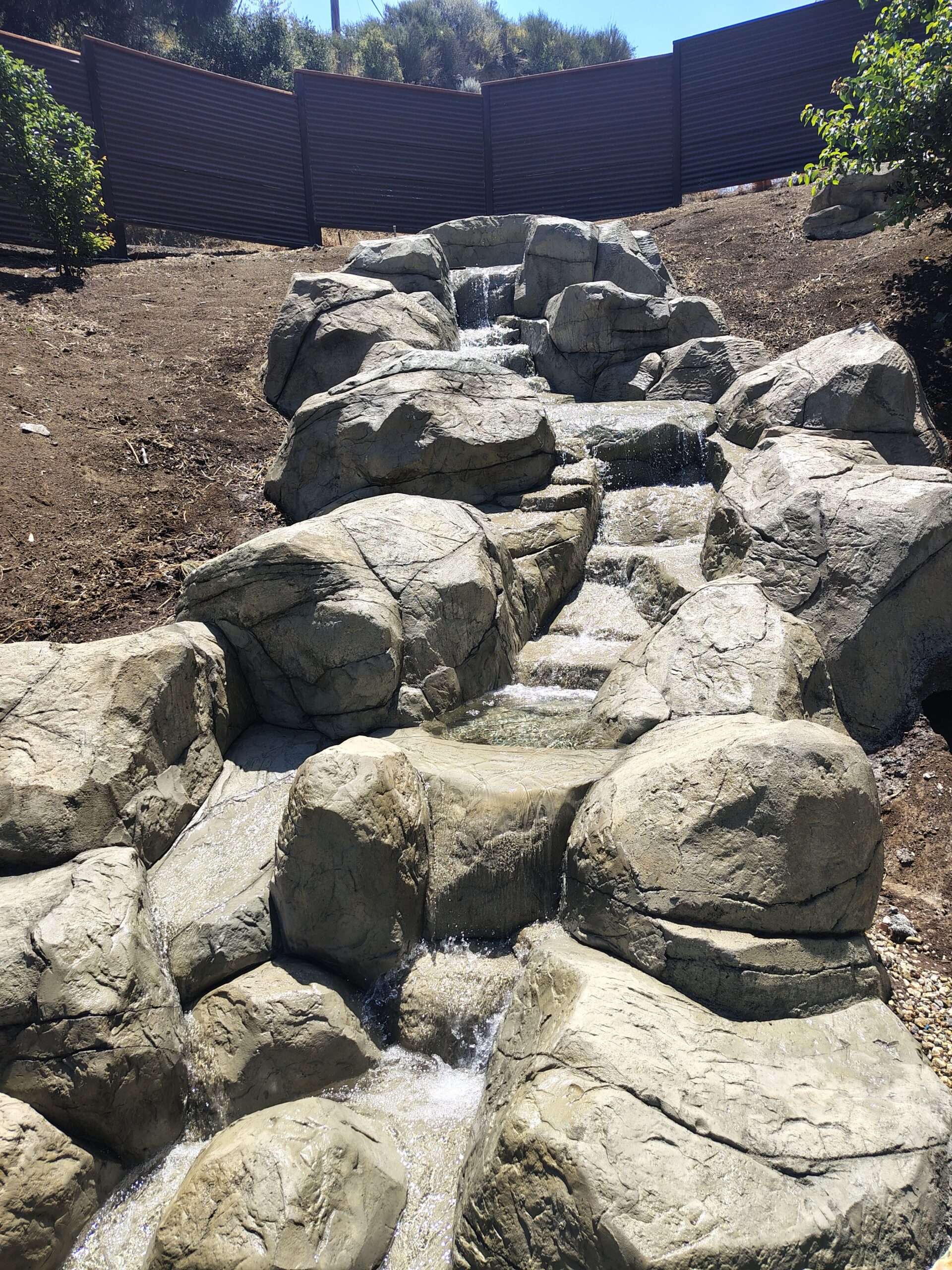
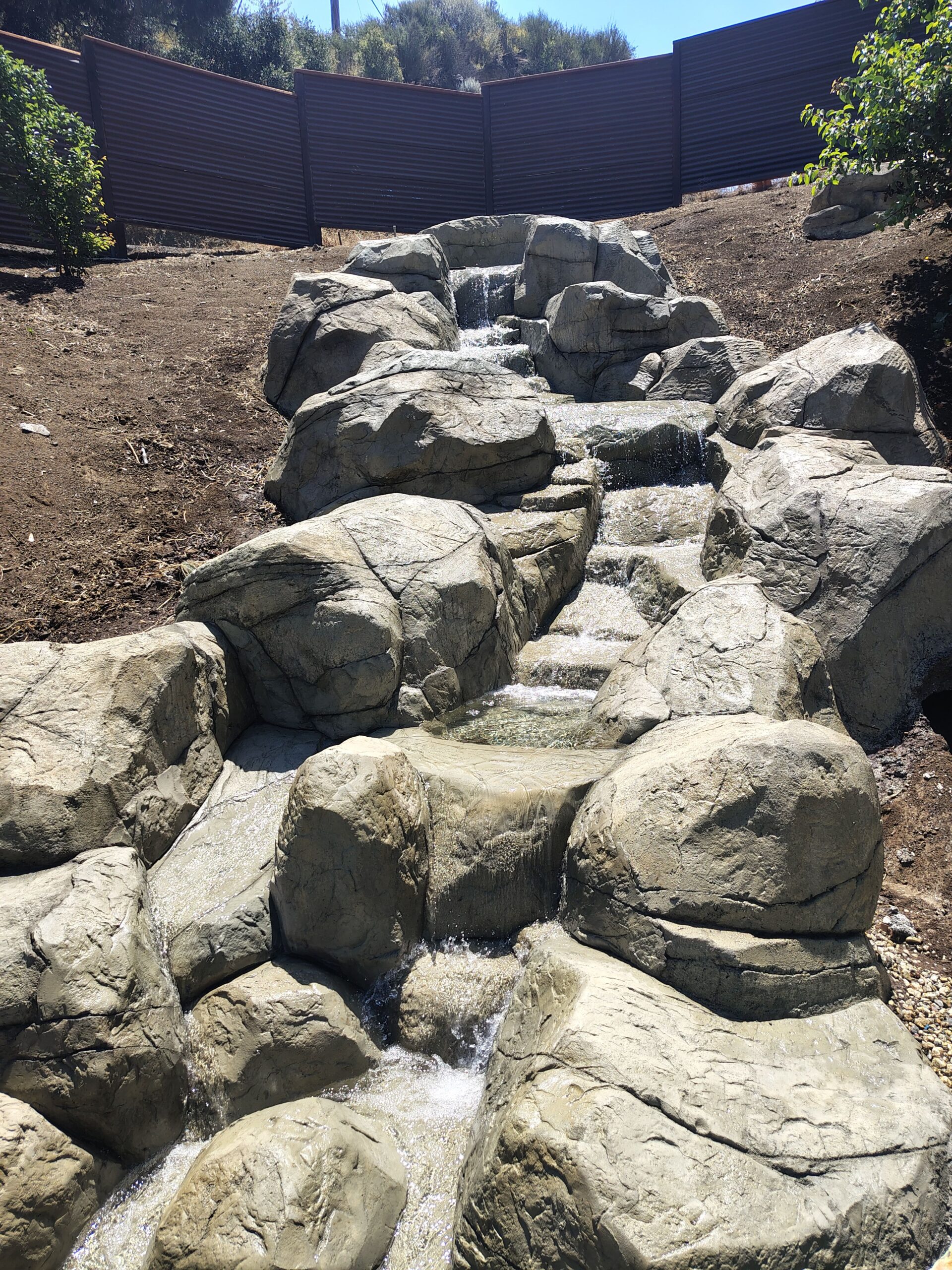
The final test was water. We ran the system and dialed in the flow at each drop point to get the right sound and visual movement at every level of the cascade. The water needed to sheet, pool, and drop in a way that looked natural - not just pour down a chute. That takes adjustment. Small changes to how a ledge sits or where a rock face angles can completely change how water behaves on it.
What you're left with is a working waterfall that ties directly into the pool, built on a real hillside, using real structural methods underneath a hand-crafted surface finish. Projects like this one in Calabasas are why we document every phase - from the concept sketch to the first time water runs through it. The engineering has to hold. The craftsmanship has to sell it.
Related services
Free quote
Want work like this at your place?
Call us, or fill out the form below. You can add photos to the form. We quote free by phone or email, usually within hours, and we tell you honestly whether you need a visit.
Give us a call. Mon to Fri 8:00 to 5:00 · Sat 8:00 to 12:00